

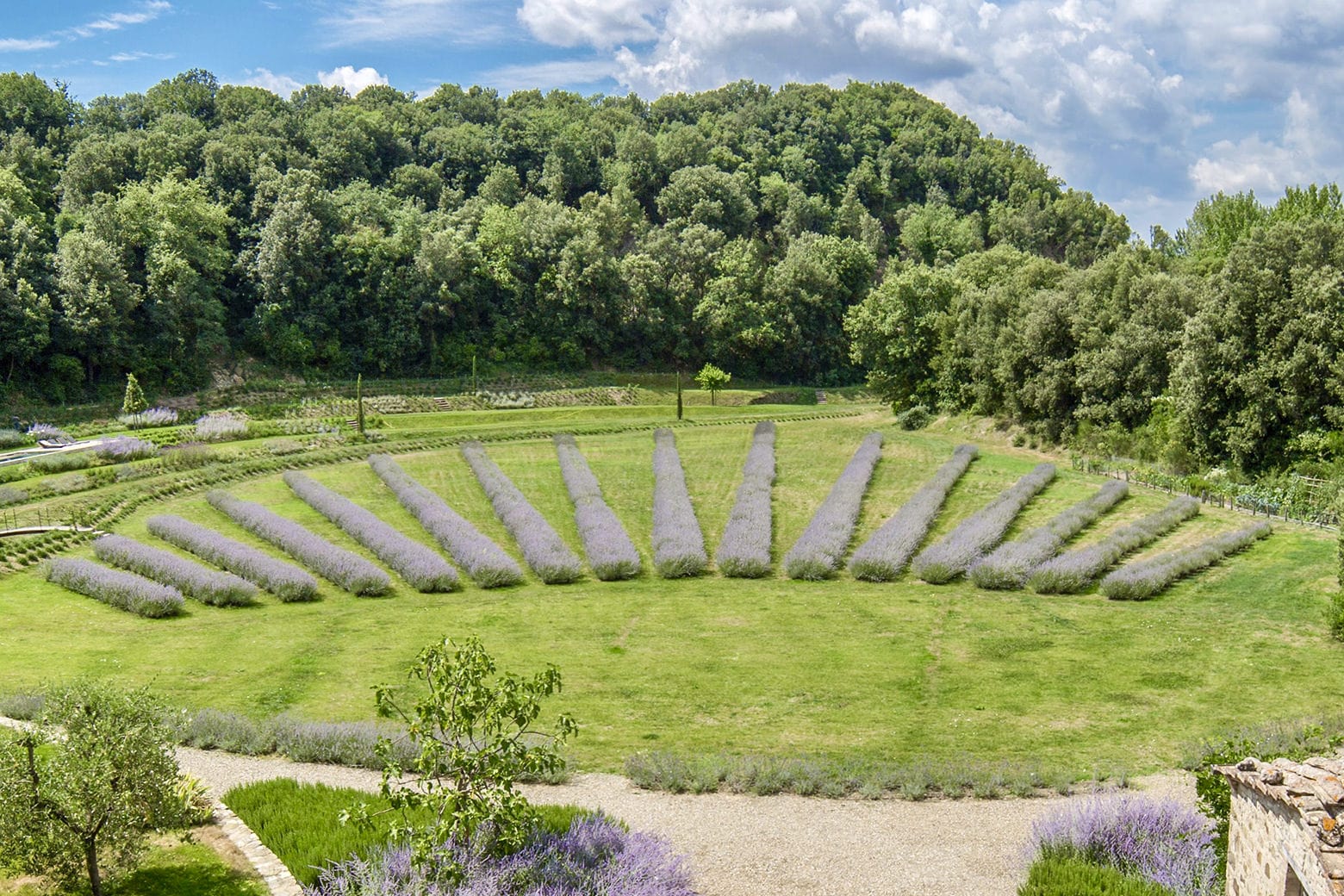
Our lavender is planted ‘a raggiera’,
Our lavender is planted ‘a raggiera’,
facilitating our pollinators and enriching our ecosystems
Our lavender is planted ‘a raggiera’,
facilitating our pollinators and enriching our ecosystems
Lavender forms an integral part of the Molino ecosystem
Planted ‘a raggiera’ in the form of sun rays, it casts an aura of scent and colour that have become one of the determining factors for our ecosystem. The variety planted is Lavandula angustifolia, favoured for its aroma and colour which creates the perfect landing beacon for a diverse group of pollinators, chiefly our bees.
Lavender forms an integral part of the Molino ecosystem
Planted ‘a raggiera’ in the form of sun rays, it casts an aura of scent and colour that have become one of the determining factors for our ecosystem. The variety planted is Lavandula angustifolia, favoured for its aroma and colour which creates the perfect landing beacon for a diverse group of pollinators, chiefly our bees.
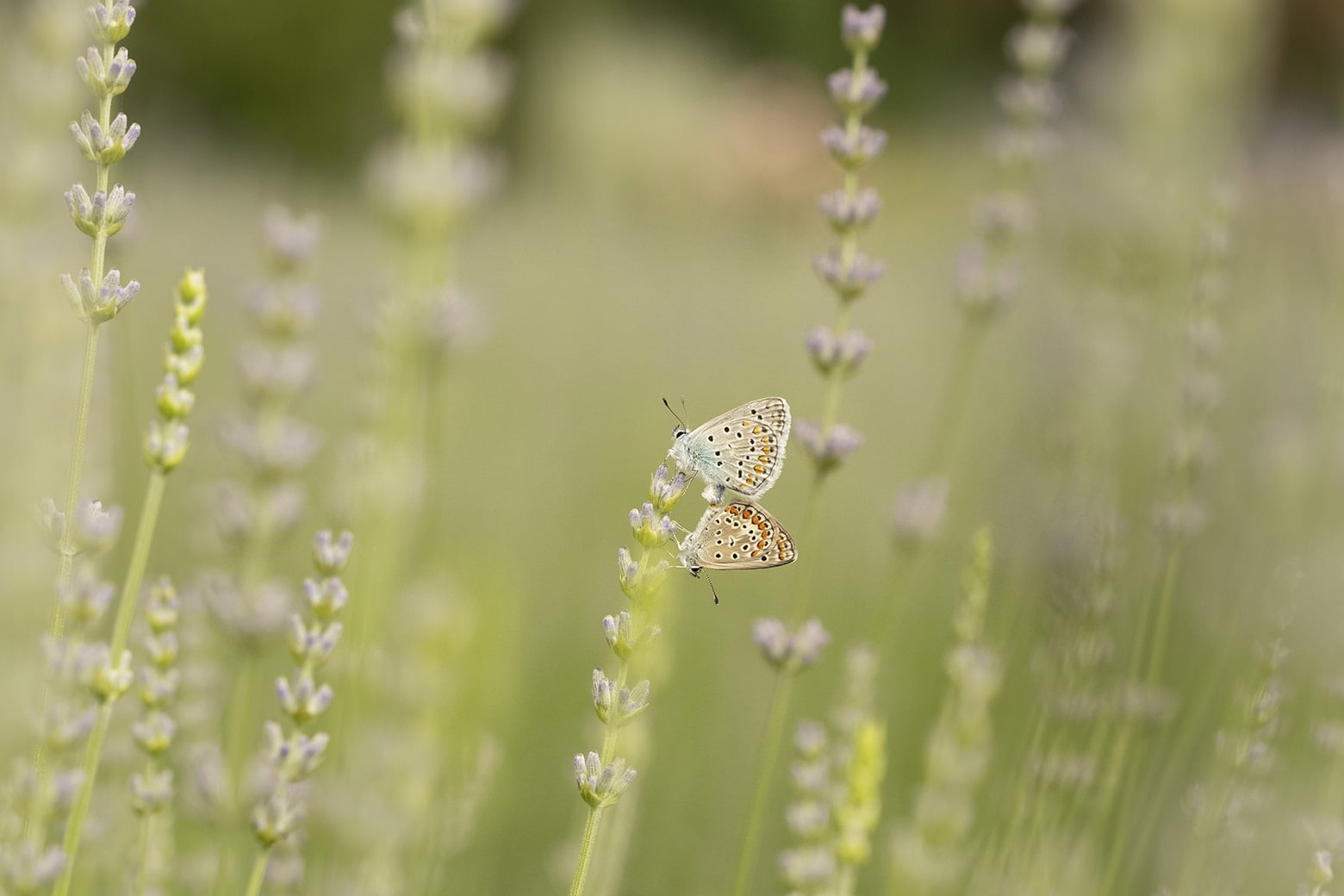
Providing foraging opportunities for our pollinators
The key purpose of our lavender is to be a catalyst for these precious insects, enriching and enhancing the biodiversity of the area. Lavender flowers are not harvested but remain intact throughout the summer months to give the greatest foraging opportunities to our precious pollinators, allowing them to build up plentiful winter stores.
Although bees are not essential to the pollination of grape vines which are not nectariferous plants, they act as a constant barometer for the health of our bio-diverse ecosystem, facilitating cross-fertilization of green manures they help improve and fix the quality and quantity of nutrients in the soil. In just a few years, this approach has already had an important impact in enhancing both the quality of the soil and the vineyard and we are convinced that this is only the beginning of this synergistic process, which is self-reinforcing by virtue of its circularity.
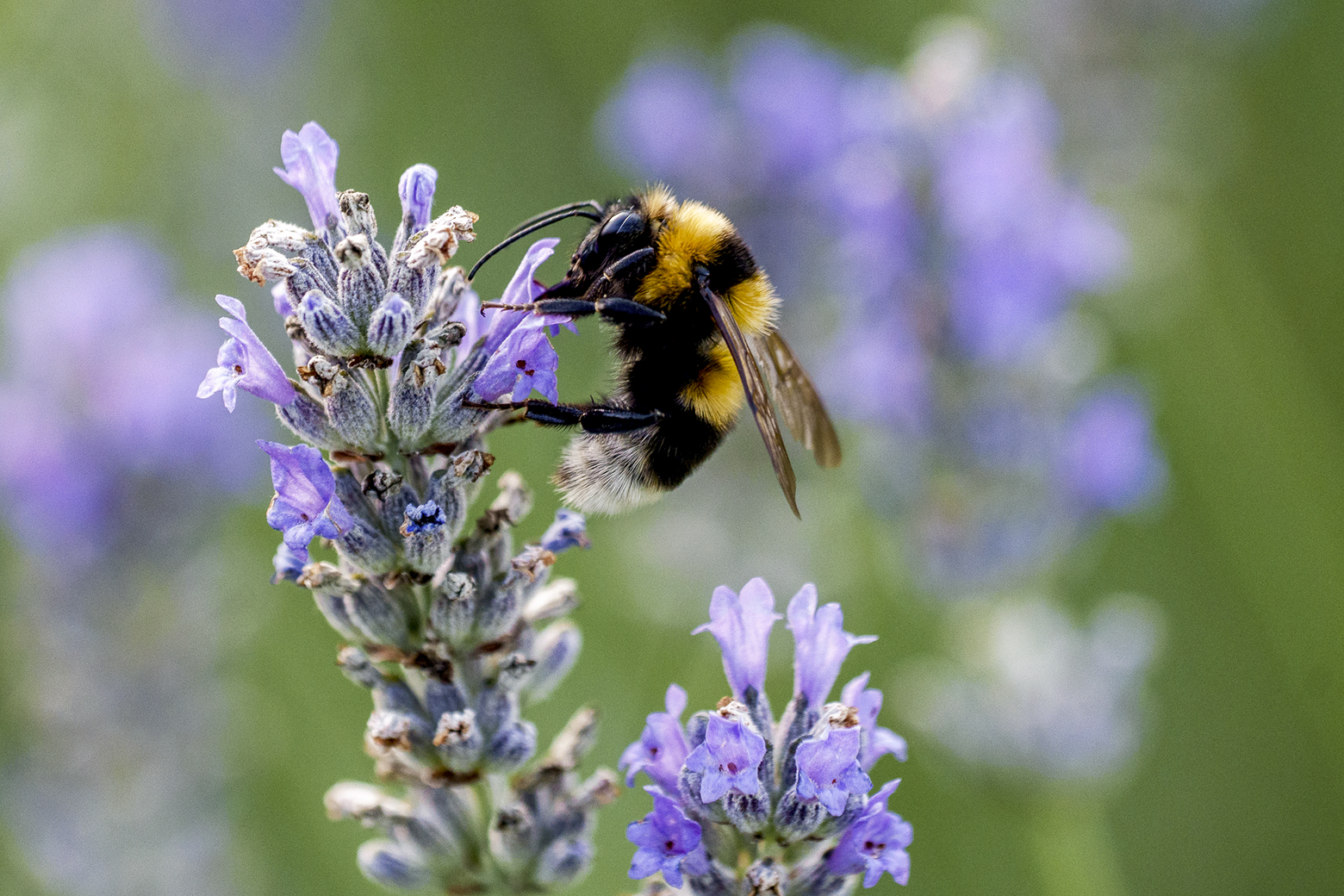
Although bees are not essential to the pollination of grape vines which are not nectariferous plants, they act as a constant barometer for the health of our bio-diverse ecosystem, facilitating cross-fertilization of green manures they help improve and fix the quality and quantity of nutrients in the soil. In just a few years, this approach has already had an important impact in enhancing both the quality of the soil and the vineyard and we are convinced that this is only the beginning of this synergistic process, which is self-reinforcing by virtue of its circularity.
Although bees are not essential to the pollination of grape vines which are not nectariferous plants, they act as a constant barometer for the health of our bio-diverse ecosystem, facilitating cross-fertilization of green manures they help improve and fix the quality and quantity of nutrients in the soil. In just a few years, this approach has already had an important impact in enhancing both the quality of the soil and the vineyard and we are convinced that this is only the beginning of this synergistic process, which is self-reinforcing by virtue of its circularity.
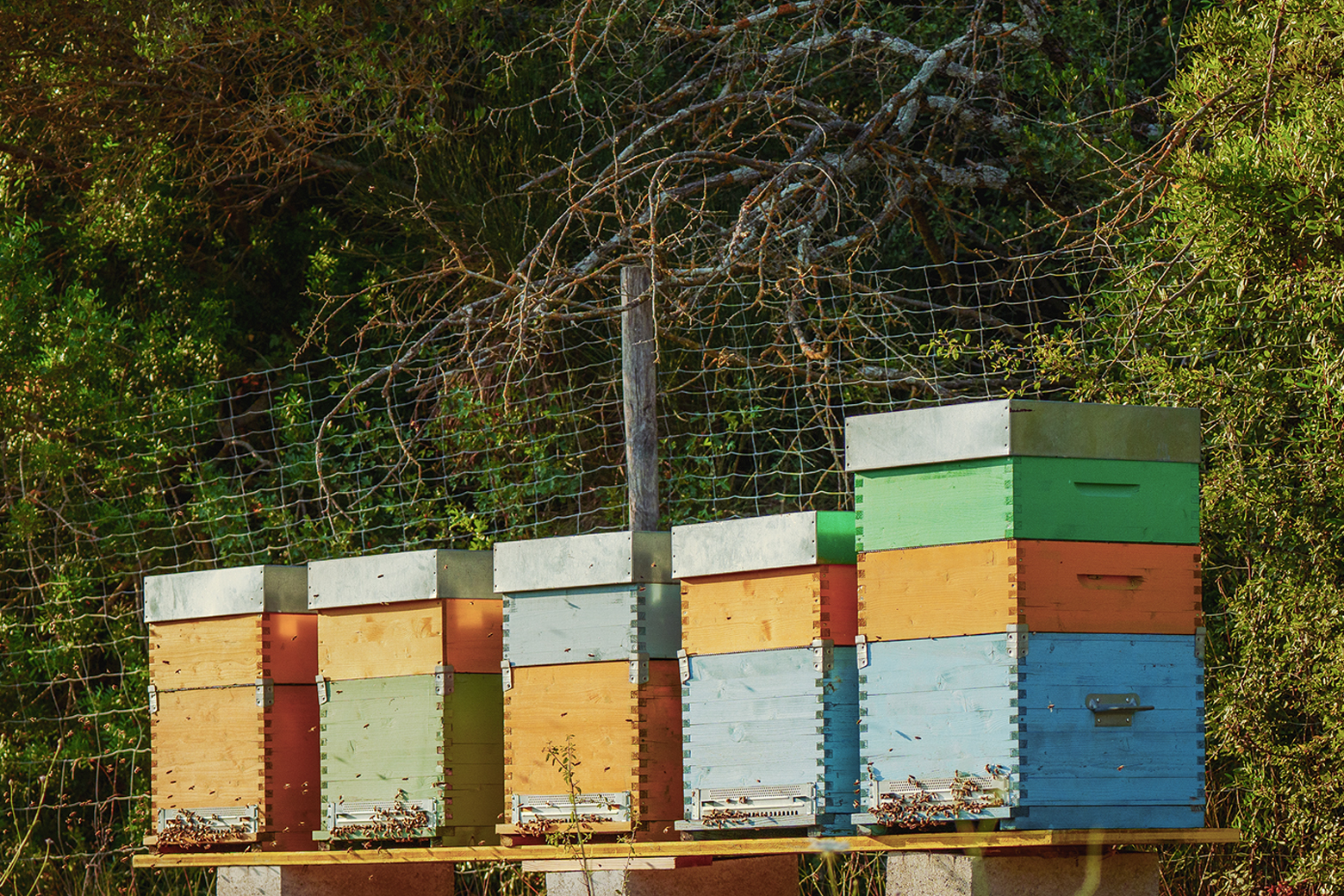
A constant guage of the health of our ecosystems
Furthermore, the presence of bees and butterflies also seems to be effective in reducing plant pathologies and by proxy, improving the quality of the grapes that become our wine. Our hives are located alongside the vineyards and olive groves under the shade of trees and sheltered from the wind. Their central location allows them to act as a constant barometer for the health of our bio-diverse ecosystem, providing an important gauge of the micro environment and symbol of a workable system.